Glass doors, safety and AS 1288
Grade A safety glass, markings, human-impact locations and privacy films — how Australian glass doors stay legal, visible and liveable without turning the living room into a risk.
Marcus Chen · Compliance editor · 19 February 2025 · 7 min read
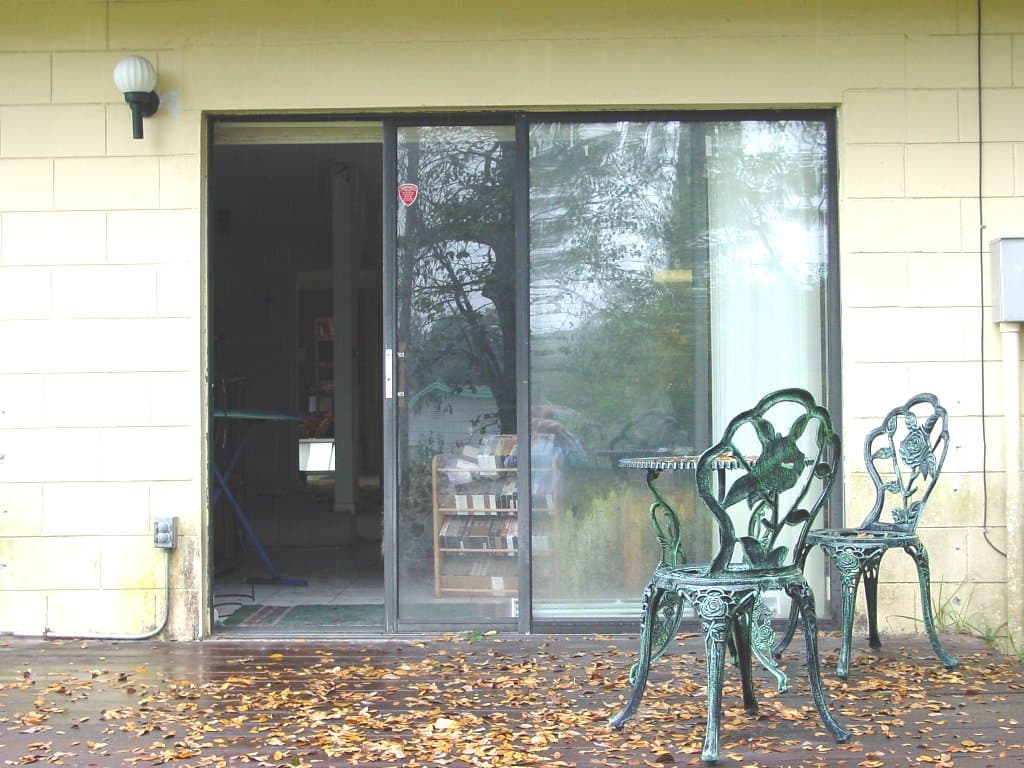
Glass in a door is a wall you can walk through, which is both the point and the hazard. Australian houses are full of sliding aluminium doors from the 1970s onward, French doors onto decks that were not in the original drawing, and new stackers that treat the back of the house as a missing wall. Most of them are fine until someone puts a shoulder through an unmarked pane, or a child meets a door that looked open.
AS 1288 — Glass in buildings — Selection and installation — is the standard the National Construction Code points at for this work. It is a set of rules about thickness, type, area, and where a human body is likely to hit, not a substitute for the standard on a tall or unusual opening.
If you are still choosing the operation of the leaf, sliding, hinged and pivot doors compared is the mechanical companion. Here the glass is the subject.
Grade A, and why the marking matters
Grade A safety glass, in the AS 1288 sense used on site, is toughened (tempered) or laminated glass that meets the human-impact requirements. Toughened glass breaks into small, relatively dull crumbs. Laminated glass may crack but tends to stay in the frame, held by the interlayer. Each behaviour is useful in a different doorway.
The pane should carry a permanent mark — usually in a corner — stating the type and the standard. An unmarked sliding door in a 1980s brick veneer is a common Australian object. It may be annealed glass that will shard. It may be toughened and the stamp has worn or been painted over. You cannot tell from across the room. A glazier can often confirm; replacement is the only way to be sure if the opening is in a human-impact location and the evidence is gone.
Do not grind the mark off for a cleaner look, and do not specify glass “to match existing” if the existing is unmarked.
Human-impact locations in ordinary houses
AS 1288 treats doors, and glass beside doors, as places people walk into. The standard sets out height bands and distance-from-opening rules. In plain language for a house:
- Glass in a door leaf is an impact location.
- Glass beside a door, within the zone a person might mistake for the opening or fall toward, is an impact location.
- Low glass that a child can hit, and glass at the bottom of a stair or landing, needs particular care.
- A full-height pane used as a wall next to a stacker is not “just a window” because you called it a window on the quote.
Thickness and type then follow from the area of the pane, the span, and whether the glass is two-edge or four-edge supported. A tall, thin pane in a steel pivot door is a different glass from a small highlight over a Victorian four-panel. The certifier wants the AS 1288 selection, not a vibe.
Heritage houses complicate this without exempting it. A Federation leadlight may be protected fabric. Options include secondary Grade A glazing or a film that is actually rated. “It has been there since 1912” is a history sentence, not a safety one.
Toughened, laminated, and the Australian climate
Toughened versus laminated
Toughened glass is the usual residential slider pane: hard, clean, and unforgiving of later cutting. Laminated glass is the better thought when you want the pane to stay put — a first-floor landing, a pane near a balustrade, cyclone debris, a street-facing entry that should not leave a hole overnight. The interlayer also cuts a little ultraviolet and a little sound. It does not make a hollow-core frame acoustic.
In climate zones 1 and 2, solar heat gain through a west-facing stacker is a comfort problem before it is a safety one. Low-e coatings and a sensible solar heat gain coefficient belong in the same specification as the Grade A type. In zones 6, 7 and 8, a large glass door is a heat-loss fin. The energy rating, weather seal and condensation essay is where U-values and aluminium breaks are argued. Safety glass and energy glass are allowed to be the same pane. They should be.
Bushfire-rated glazed doors add another layer: AS 3959 can require specific glass types, screenings and seals at BAL-29 and above. A pretty toughened slider is not automatically a BAL door. See bushfire BAL ratings and door specification.
Doors next to balustrades and decks
A sliding door that opens onto a deck with a drop, or a hinged glass door at the top of external stairs, sits at the overlap of AS 1288 and the barrier rules in the NCC. People lean on glass that looks like a wall. People walk through glass that looks like air.
If the door itself is the barrier — a French door on a first-floor verandah that might be left open — the open leaf is not a balustrade. The remaining fixed pane or the adjacent barrier has to do that job. Design the landing so a half-open door does not create a body-width gap over a two-metre drop. This is obvious after an accident and strangely easy to miss in a joinery shop drawing.
Balustrade glass has different load cases and often a different marking. Do not reuse offcuts. A 20 millimetre lip at a slider, plus a glare-washed pane, is how a guest meets the garden the hard way. The NCC access and threshold rules are pushing new houses toward lower sills — good for wheels and for not walking into glass.
Visibility, manifestations and the invisible wall
A clean modern house loves an unmarked pane. People walk into unmarked panes. Manifestation — decals, transom bars, a change of floor finish, a handle at a height you can see — is not a betrayal of the architecture. AS 1288 and workplace rules talk about making glass apparent; houses get less formal language and the same broken noses.
Practical residential habits that work:
- Keep hardware in the visual field. A full-height pull on a slider is safer than a tiny recessed cup in bright sun.
- Use a mid-rail or a manifestation band on a fully glazed hinged door that can be mistaken for a opening.
- Contrast the frame with the view. A pale frame against a pale sky disappears; a deeper colour holds the edge.
- Teach children, then assume they will still run.
Night is worse. A lit living room and a dark garden turn the door into a mirror. Curtains, a discrete manifestation, or an exterior light that breaks the reflection are kinder than hoping guests remember the plan.
Privacy films, security films and what they do not do
Decorative and low-e films are useful. They cut overlooking from a side path, knock back western glare, and can make a bathroom door onto a lightwell less of a lantern. They do not change the Grade of the glass underneath. A security film may hold shards in place after impact; it is not a free upgrade from annealed to Grade A in the eyes of a surveyor unless the whole system is assessed as such.
A dark film on a partly shaded pane is a thermal-stress story some glaziers know too well. If the brief is privacy, consider blinds, a translucent laminated interlayer, or a screen. Do not put film over the safety mark, and do not keep a cracked pane “for now”.
Glass is only invisible when nobody is moving. The moment a body is in the room, the pane has to be Grade A, marked, and obvious enough that a guest does not have to guess where the house ends.
Specifying and replacing without folklore
Write the glass as you would write a beam:
- Location: door leaf, sidelight, highlight, adjacent fixed pane.
- Type: toughened, laminated, or a defined insulating glass unit with a Grade A inner or outer as required.
- Thickness and maximum area from AS 1288, not from a leftover crate.
- Marking, visible after installation.
- Coating, SHGC and U-value for the climate zone.
- Compatibility with BAL, wind region, and any balustrade function.
- How the pane is glazed into the frame so it cannot pop out under a modest impact.
For replacements in existing sliders, measure the rebate, not the daylight. Old aluminium sections are unforgiving. If the frame is corroded or the rollers are dead, replacing only the glass is a half-job. Coastal frames have their own aluminium problems.
A glass door that meets AS 1288 is not automatically a kind door. It still needs a handle you can see, a threshold you can cross, and a family that understands it is a wall. The standard keeps the glass from becoming a blade. The rest of the specification keeps it from becoming a surprise.
Frequently asked questions
- What does Grade A safety glass mean on a door?
- In AS 1288 it means toughened or laminated glass that has passed the relevant human-impact tests. Annealed glass of ordinary thickness is not Grade A. A door leaf or sidelight in a human-impact location should be Grade A and permanently marked.
- Can I put privacy film on an existing sliding door and call it done?
- Film can help with overlooking and glare. It does not turn annealed glass into Grade A safety glass, and some films complicate later toughening identification. If the pane is unmarked and in an impact location, replacement is the honest path.
- Do French doors onto a deck need safety glass in every pane?
- If the glass is in a door leaf or in a human-impact location beside the opening, AS 1288 generally wants Grade A. Small leadlights and heritage highlights need a specific assessment. Do not assume a pretty bar layout exempts the pane.
- Is a glass balustrade next to a sliding door a different problem?
- Yes. Balustrade glass has its own load and marking rules. A door that opens onto a landing, or a fixed pane that people might lean on, can sit in both regimes. Treat them as one design, not two invoices.
Keep reading
Composite and uPVC doors in Australian climates
uPVC versus composite skins, heat distortion, colour fade and recyclability — when plastic doors make sense in Australia and when timber is still the quieter specification.
Elena Vukovic · 24 March 2025
Steel security doors without the fortress look
Steel skins, multipoint locks and rust — how to specify a secure Australian entry that still belongs on a weatherboard street rather than a compound.
Tom Ashford · 15 January 2025
Aluminium doors for coastal Australia
Powdercoat, anodising, 316 screws and thermal breaks — how aluminium doors survive salt, sun and cyclone country without turning into a maintenance hobby.
Elena Vukovic · 21 November 2024