Composite and uPVC doors in Australian climates
uPVC versus composite skins, heat distortion, colour fade and recyclability — when plastic doors make sense in Australia and when timber is still the quieter specification.
Elena Vukovic · Building editor · 24 March 2025 · 7 min read
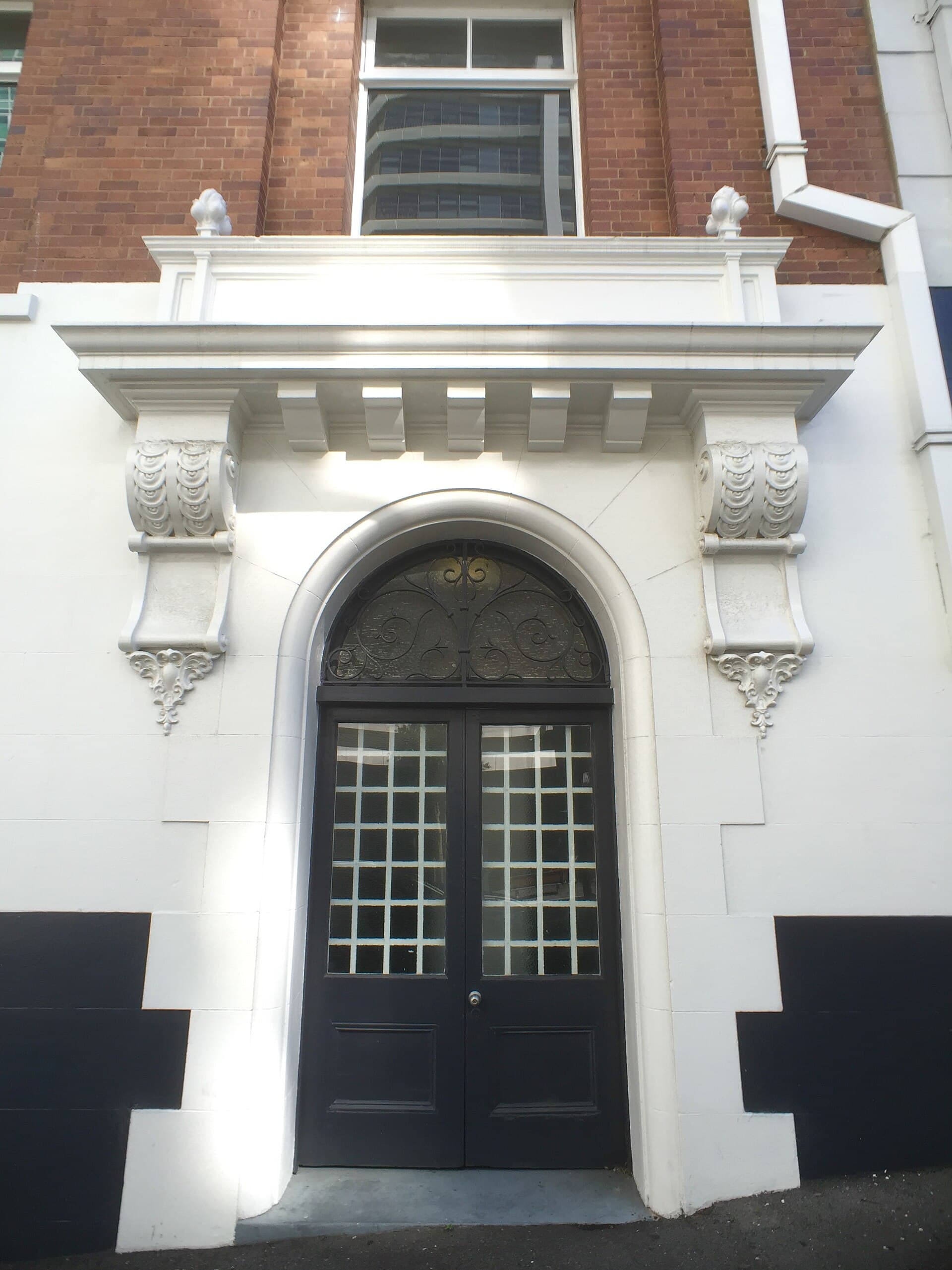
Plastic doors arrived in Australian suburbs with a European accent and a promise that paint was over. Some of them have been quietly excellent: stable, sealed, easy to live with on a brick veneer that never wanted a joiner. Some have gone wavy on a western wall, faded to a tired khaki, or sat on a Queenslander like a visitor who would not take their shoes off.
Composite and uPVC are not one material. They are a family of skins, cores and reinforcements that behave differently in Darwin humidity, Perth glare and a Hobart winter. This is a climate note, not a brand ranking. The rest of the materials desk — timber, aluminium, steel, glass — is there because no single leaf wins every opening.
What uPVC is doing in a door
Unplasticised polyvinyl chloride is a rigid vinyl. In a door it is usually an extrusion: hollow chambers, steel or aluminium reinforcement in the important webs, a glazed panel or a foam-filled slab, and a weld at the corners. The European window industry spent decades on this. Australia imported the profiles, then discovered that a dark door on a 40-degree afternoon is not a Munich March.
uPVC’s virtues are real. It does not rot. It takes a consistent weather seal. It can be made to a tight air-leakage number, which matters when you are chasing a WERS rating or trying to stop a southerly from under the door. It is light enough for a competent installer and familiar to a generation of window fitters.
Its vices are thermal. The material softens as temperature rises. A foil-wrapped dark oak on an unshaded west wall in climate zone 5 — think western Sydney, Adelaide plains, Perth — can move enough to scrape a rebate, lose a lock alignment, or take a permanent bow. Pale colours and a verandah that actually shades the leaf are not aesthetic advice. They are the physics of vinyl.
Reinforcement helps the lock and the hinges more than it repeals the sun. Ask what is in the profile, how the corners are joined, and what the warranty says about colour, latitude and orientation. A warranty that assumes a shaded English elevation is a short story.
Composite skins, and the honest middle
“Composite” on an Australian quote can mean almost anything: a glass-reinforced plastic skin over polyurethane foam; a compression-moulded door with a timber-look skin; a steel-faced leaf with a foam core sold as composite because the edges are plastic; a fibreglass entry imported with a colonial panel pattern. Ask for a cut-through.
The better residential composites were designed for exactly the problem timber has on a sunny, dry site: they stay flatter, they insulate better than a hollow aluminium stile, and they take a paint or a through-colour that does not need an annual oil. They are heavier than uPVC and usually more stable in heat. They are not immune to ultraviolet. A cheap foil still chalks. A gelcoat still needs a wash.
Fibreglass-skinned doors have a good record in hot, dry American and Australian work, which is a polite way of saying they were thinking about Phoenix and then found Perth. They can be painted, which is a mercy when the household changes its mind. They can also look a little too perfect on a house that is otherwise imperfect weatherboard. That is a style problem, not a materials failure.
Compared with solid timber, engineered and hollow-core, a composite entry is often the right swap when the existing hardwood has already twisted and you do not want to become a painter. It is the wrong swap when the pleasure of the house is the leaf itself — a Federation four-panel, a Queenslander French door — and the repair is still possible.
Heat, colour and the western wall
Australian solar load is the test these products were not all designed for. A dark door facing west, with a dark tiled porch bouncing more heat at it, can sit well above air temperature. uPVC feels that first. Composite skins feel it as fade and as pressure on gaskets. Timber feels it as a moisture gradient. Aluminium feels it as a hot handle and a condensation story on the inside if there is no break.
Practical habits that keep plastic doors honest:
- Prefer light or mid colours on unshaded walls in zones 1 to 5.
- Give the leaf a verandah, an eave, or a simple screen so it is not a solar collector.
- Specify a thermal break or an insulating core if the climate zone wants it, and check the WERS figures rather than the adjective “energy-efficient”.
- Keep dark foils for shaded south or south-east elevations, or accept a shorter life.
- Ask for a colour-fastness rating and a replacement path if the foil delaminates.
In climate zone 1 and the hotter end of zone 2, insect screens and security screens do extra work: they shade, they stop the slam of a northerly, and they keep the primary door from being the only weather face. In zone 7 and 8, cold is the other edge. uPVC can be a decent insulator. It still needs a threshold detail that does not leak meltwater or a south-westerly under the rail.
Fade, chalk and the look of age
Timber goes silver, then you paint it. uPVC goes chalky or yellow, then you argue with the warranty. Composite foils go dull in patches where the sun hits and the garden hose does not. None of this is sudden. It is five to twelve years of Australian ultraviolet, depending on colour and exposure.
Washing helps. Harsh solvents do not. Abrasive pads ruin foils. A pale painted composite that can be recoated is a more forgiving long-term object than a printed oak that can only be replaced. If the household likes to change colour, that fact belongs in the specification.
Heritage streets add a social fade. A woodgrain uPVC door on a row of oil-painted timber entries will always look like the rental. That may be survivable. It is rarely a kindness to the terrace.
Recyclability, waste and the end of the leaf
uPVC window and door profiles can be recycled in Australia when they are separated from glass, steel and the mixed small parts. The industry has a stream. It is not as simple as putting a door on the nature strip and wishing. Reinforcement has to come out. Glass is its own problem. Locks are e-waste with a screwdriver.
Composite doors are typically a landfill sandwich unless the maker runs a take-back. Foam cores, bonded skins and mixed polymers are not a council bin product. If environmental language is part of the sale, ask what happens at year twenty-five. A plantation-timber door that can be repaired, or an aluminium door that can be remelted, sometimes wins that conversation even if it loses the first-cost one.
None of this makes plastic immoral. It makes “composite” a construction description, not a virtue.
When they make sense, and when timber still should
The cases for plastic, and for timber
Composite or uPVC is a sensible specification when:
- The opening is a new or recently reworked brick veneer or masonry reveal, not a twisted weatherboard frame.
- You want a stable, well-sealed entry with predictable air leakage and a documented WERS rating.
- Painting is a chore the household will not keep up, and a pale colour is acceptable.
- Acoustic or thermal insulation in the leaf is part of the brief.
- Heritage overlay is not asking the door to read as joinery.
Timber remains the better sentence when:
- The house is a weatherboard, Queenslander or Federation fabric that still has a joinery language.
- The leaf can be shaded and maintained, and someone will actually paint the six edges.
- Repair matters more than replacement — a farm door, a loved four-panel, a shopfront with history.
- You want a species and a grain, not a printed suggestion of one.
Aluminium still wins many coastal sliders; see aluminium doors for coastal Australia. Glass still has to be Grade A where AS 1288 says so, whatever the frame is made of.
A plastic door is not a moral event. It is a polymer in a climate. If the climate is a western sun and the polymer is dark uPVC, the climate will write the last paragraph.
Write the product as a system: skin, core, reinforcement, corners; colour and UV warranty by orientation; WERS figures; AS 1288 glass if glazed; hardware for the leaf thickness; a frame that fits a straight opening; and what the maker will take back. Then stand on the porch at 3 p.m. in February. If you would not leave a dark vinyl object there, do not specify one as a front door. The materials hub is organised that way on purpose.
Frequently asked questions
- Will a dark uPVC door warp on a western wall in summer?
- It can. uPVC softens as it heats, and a dark foil on a west-facing entry in climate zones 1 to 5 is a known risk. Lighter colours, a composite skin with a more stable core, or a verandah that actually shades the leaf are the usual remedies.
- Are composite doors just plastic pretending to be timber?
- Some are foil-wrapped slabs with a timber-grain print. Better composite doors use glass-reinforced plastic or similar skins over an insulating core, with a separate thermal and dimensional logic. Read the construction, not the showroom oak photograph.
- Do uPVC doors belong on a weatherboard cottage?
- Rarely, if the cottage still reads as timber joinery. The profiles, the sheen and the way the leaf meets a bullnose verandah tend to argue with the house. A painted engineered timber or a carefully detailed composite can be quieter.
- Can these doors be recycled at end of life?
- uPVC has a recycling stream in Australia when it is clean and separated. Mixed composite doors — skins, foam, steel reinforcement, glass, lock — are harder to unpick. Ask the supplier what they take back, and do not treat “composite” as a green word by default.
Keep reading
Glass doors, safety and AS 1288
Grade A safety glass, markings, human-impact locations and privacy films — how Australian glass doors stay legal, visible and liveable without turning the living room into a risk.
Marcus Chen · 19 February 2025
Steel security doors without the fortress look
Steel skins, multipoint locks and rust — how to specify a secure Australian entry that still belongs on a weatherboard street rather than a compound.
Tom Ashford · 15 January 2025
Aluminium doors for coastal Australia
Powdercoat, anodising, 316 screws and thermal breaks — how aluminium doors survive salt, sun and cyclone country without turning into a maintenance hobby.
Elena Vukovic · 21 November 2024