Queenslander lattice and screen traditions
Lattice, hopper windows and screen doors on a high-set verandah — how Queensland houses manage airflow, termites, salt and the habit of living outside the hall.
Priya Nair · Heritage and style · 15 May 2025 · 7 min read
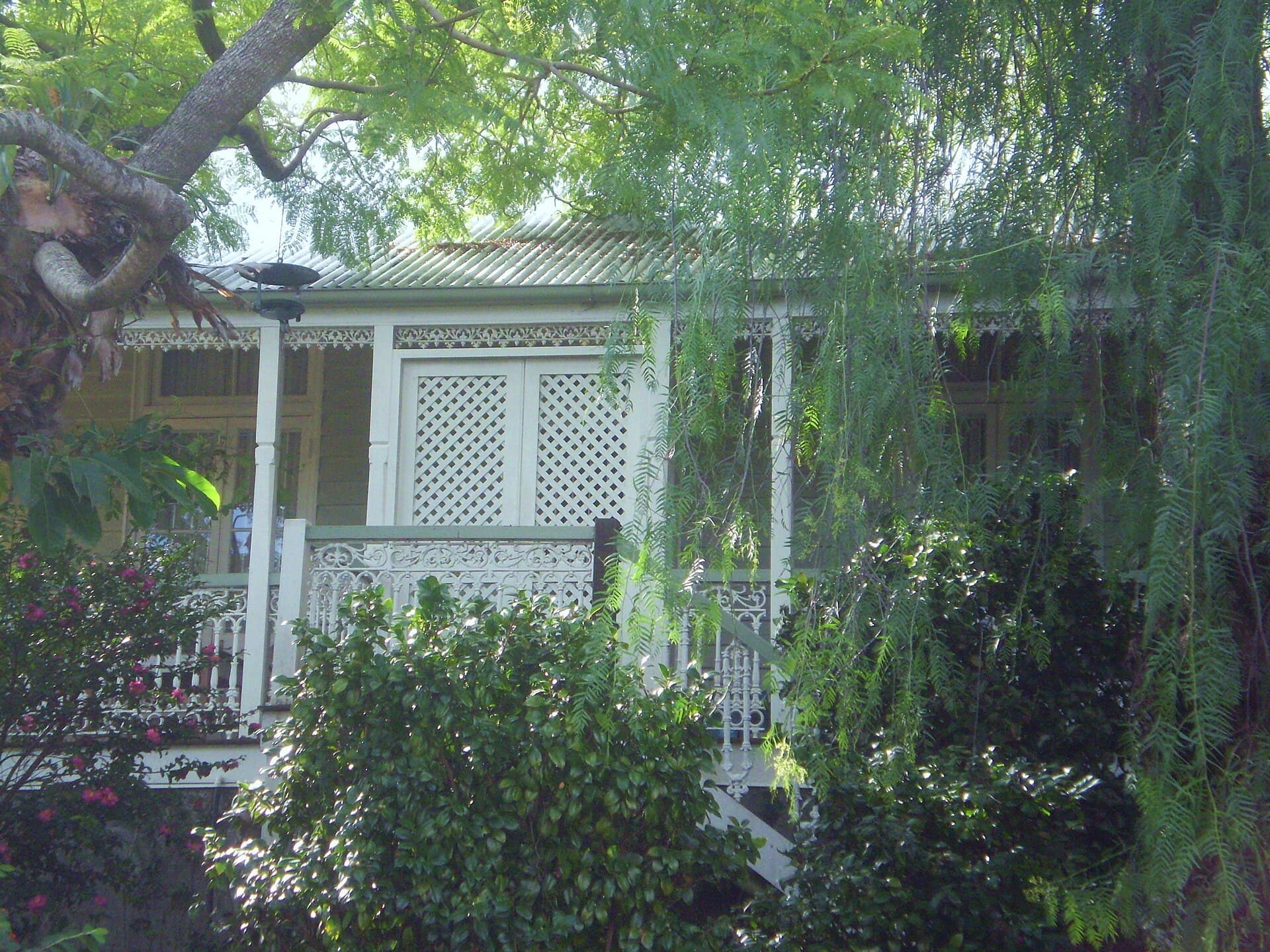
A Queenslander is a timber house on stumps, with a verandah that was always meant to be a room. The lattice, the hopper, the screen door slapping in a northerly — these are the climate system, not decorations added after a renovation show. Hot air wants to leave. A breeze wants a way through.
I look at these houses the way a Sydney terrace looks at a hat: with respect, and with a tape. The same habits turn up in northern New South Wales and in any high-set house that decided weatherboards and air were cheaper than masonry. A pretty lattice that holds moisture against a post is not a tradition. It is a repair bill.
High-set, and why the door is not the whole storey
Queenslanders sit up. The undercroft moves air, stores a mower, and, in a flood plain, gives the river a way past the living room. Stairs meet a verandah. The front door is often not on the street plane; it is on that verandah, already in shade, already behind a screen.
That geometry is why these houses feel generous in March. It is also why a replacement door specified like a Melbourne brick-veneer entry — a sealed slab, a tight threshold, no screen, a shallow porch — makes the hallway sulk.
The undercroft is a termite and damp conversation. Posts, bearers and the bottom of a stair are where inspection happens. A lattice skirt that cannot be opened is a skirt that hides galleries. If you close in the stumps, do it with panels you can take off, and with the termite management system the house already relies on. The door at the top of the stair does not repeal the biology at the bottom.
Wind under the house will also try every gap in a floor. People then plane bedroom doors in the dry season and wonder why they rattle in the wet. Humidity is a whole-house problem.
Lattice as climate, not as a cage
Timber lattice — criss-cross battens, sometimes diagonal, sometimes square — shades a verandah without killing the breeze. It is the original privacy screen of inner Brisbane and the coastal towns. It cuts western sun. It lets rain blow through instead of turning the verandah into a drum. It is also a climbing frame for a morning glory that will hold water against the rail.
Use it where shade and a filtered view are the brief. Do not ask it to be security. A shoulder will persuade lattice. So will a pair of fencing pliers. If the street has changed, the honest move is a rated security screen that actually works at the door, and lattice where it was always meant to sit: along the verandah edge, at the side path, around the laundry.
Painted lattice lasts longer than stained lattice in Queensland ultraviolet, provided you prime the end grain and keep a wet edge off the post. Aluminium lattice exists and does not rot. It can look fine on a rear verandah and a bit like a carport on a 1920s street elevation. Heritage and character overlays in Brisbane and the regional councils often prefer timber on the visible face. Check before you order a powdercoated sheet.
Deep verandahs make lattice work. A 900 millimetre lip of roof with a cage of battens is a hot cupboard. If the house lost its verandah in a 1970s tidy-up, putting lattice on the remaining sliver will not bring the climate back. Putting the verandah back might.
Hopper windows, highlights and the painted-shut problem
A hopper is a sash that opens in at the top, usually over a door or along a verandah wall. Queenslanders use them because heat rises and a high opening lets it out while the screen door does the talking. Fanlights and fixed highlights are the cousins that do not open.
The failure mode is paint. Fifty years of enamel and a hopper becomes a transom picture. The hallway then depends on ceiling fans and the air-conditioner. Free the hopper. Rehang it if the cords or stays are tired. Put insect mesh on it, or accept that the gecko is part of the household.
Glass in these openings is still glass under AS 1288 if a person can meet it. A highlight above a door is less of an impact risk than a full-lite leaf, but a sidelight on the stair landing is not. Grade A safety glass belongs where the standard says it does, even on a house that predates the standard. Leadlight in a Queenslander hopper is less common than in a Sydney Federation door, but coloured glass turns up, and it is worth keeping.
Bushfire-prone edges of the ranges and the peri-urban fringe add another constraint. A hopper that is part of an AS 3959 strategy may need a screen or a seal the original joiner never imagined. The habit of opening the house and the habit of shutting it against embers have to be designed together. They will not design themselves.
Screen doors, airflow and the lock you will use
The Queenslander screen door is a cultural object: a timber frame, a fly mesh, a spring closer, a slap. It exists so the solid leaf can stand open. That is the whole point. Air moves. The hallway stays liveable. Visitors announce themselves.
Insects are the first job. Security is a later job that many streets now require. A flywire door with a key is not a security door. A 316 mesh door with a deadlock can still let the breeze through if the open area is honest. Specify the product you mean. Our security-screen essay is the longer locksmith version; the style version is: keep the verandah habit, change the mesh if the street has changed.
Springs and closers on screens should shut the door without slamming it through the old glass. A pneumatic closer, adjusted, is kinder than a rusty farm spring. Three hinges on a tall screen. Stainless pins near the coast — the same salt-air rule as any other hardware, from Wynnum to Townsville.
Keying the screen alike with the entry leaf is a kindness. Leaving both unlocked because the spring is annoying is how the tradition becomes a claim.
Termites, weatherboards and the timber that was always a snack
Subterranean termites are the ordinary tax on a timber house in climate zones 1 and 2, and they are not rare further south. They do not love a door leaf as much as they love a wet post, a garden bed against weatherboards, and a step that touches soil. They will take a screen stile if you offer it.
Practical habits that are not a pest-control lecture:
- Inspect posts, stair stringers and the back of lattice on a schedule, not after the bearer powdering.
- Keep soil, compost and ivy off the weatherboards and the verandah plate.
- Do not “fix” a hollow stile with foam. Replace the member.
- A metal ant cap and a clean inspection zone still matter if the house was built with them.
- When you replace a front door in weatherboard, look at the jamb and the stud. A pretty new leaf on a galleryed reveal is a delay.
Rot from rain is the other timber story. In-swing entries under a leaking valley, or a door that sits in a puddle at the stair head, lose the bottom rail the same way a Victorian terrace does. Flashings, a drip groove, and a verandah that still has its fall will save more doors than a harder species.
Coastal Queensland adds salt. Specify 316 mesh and screws, and a paint system you will wash. The lattice shows ferrous staples first.
Living with the tradition, not in a museum
You can keep the habit without pretending it is 1924.
- Restore or reproduce the screen line so the solid leaf can stay open in decent weather.
- Use lattice for shade and privacy, not as a lock.
- Free the hoppers. Screen them. The ceiling fan will thank you.
- Meet insurance and the NCC on the locks, the glass and any BAL that applies.
- Make the undercroft inspectable. Termites do not respect a character overlay.
- If you enclose the verandah, you are changing the climate system. Do it with openings, not with a sealed room that cooks.
A high-set house with a working verandah is already a piece of contemporary living. The lattice and the screen are how that room stays possible in humidity. Specify them as climate equipment. The pretty shadow on the weatherboards is a side effect.
A Queenslander without airflow is just a timber box on posts. The screen door is the machine.
The style is the decision to live on the verandah and let the house breathe. Keep that decision, then bring the locks, the mesh and the termite inspection into the present tense.
Frequently asked questions
- Is lattice enough security on a Queenslander verandah?
- No. Lattice is shade, privacy and a breeze. It is not a lock. If the brief is security, specify a rated screen or grille and a deadlock the insurer will recognise. Lattice can still sit outside that line.
- Do hopper windows above a door still make sense?
- Yes, if you will open them. A hopper or highlight that is painted shut is decoration. One that opens, screens and shuts is the original air-conditioning of a high-set house.
- How do I treat termites around a timber screen door?
- Keep the leaf off soil, keep the verandah dry enough to inspect, and do not bury posts in garden beds. Termite management is a building system, not a can of spray on the door. Replace what is galleryed; do not fill it with expanding foam.
- Can I put a modern security screen on a heritage Queenslander?
- Often, if the frame is quiet and the mesh is not a fortress. Council character controls vary. A slim 316 door that lets the old leaf stay open is usually kinder than a diamond grille painted beige.
Keep reading
Contemporary Australian entry design
Pivot blades, recessed porches and the lighting of a house number — how a contemporary Australian front door balances privacy, weather, BAL and the street.
Priya Nair · 10 July 2025
Federation and Victorian door restoration
Four-panel leaves, highlights and leadlight under heritage overlays — when to repair an Australian Victorian or Federation door, and when a reproduction is the honest job.
Priya Nair · 3 April 2025
When to repair or replace a front door
Rot, delamination, failed seals and heritage value — the cost crossover where an Australian front door stops being a repair and starts being a doorset.
Door Sales editorial · 6 November 2025