Door hardware finishes for salt and sun
PVD, powdercoat and 316 stainless on a coastal verandah — which finishes survive Australian salt and ultraviolet, and which chalk into a maintenance hobby.
Tom Ashford · Hardware and security · 9 January 2025 · 6 min read
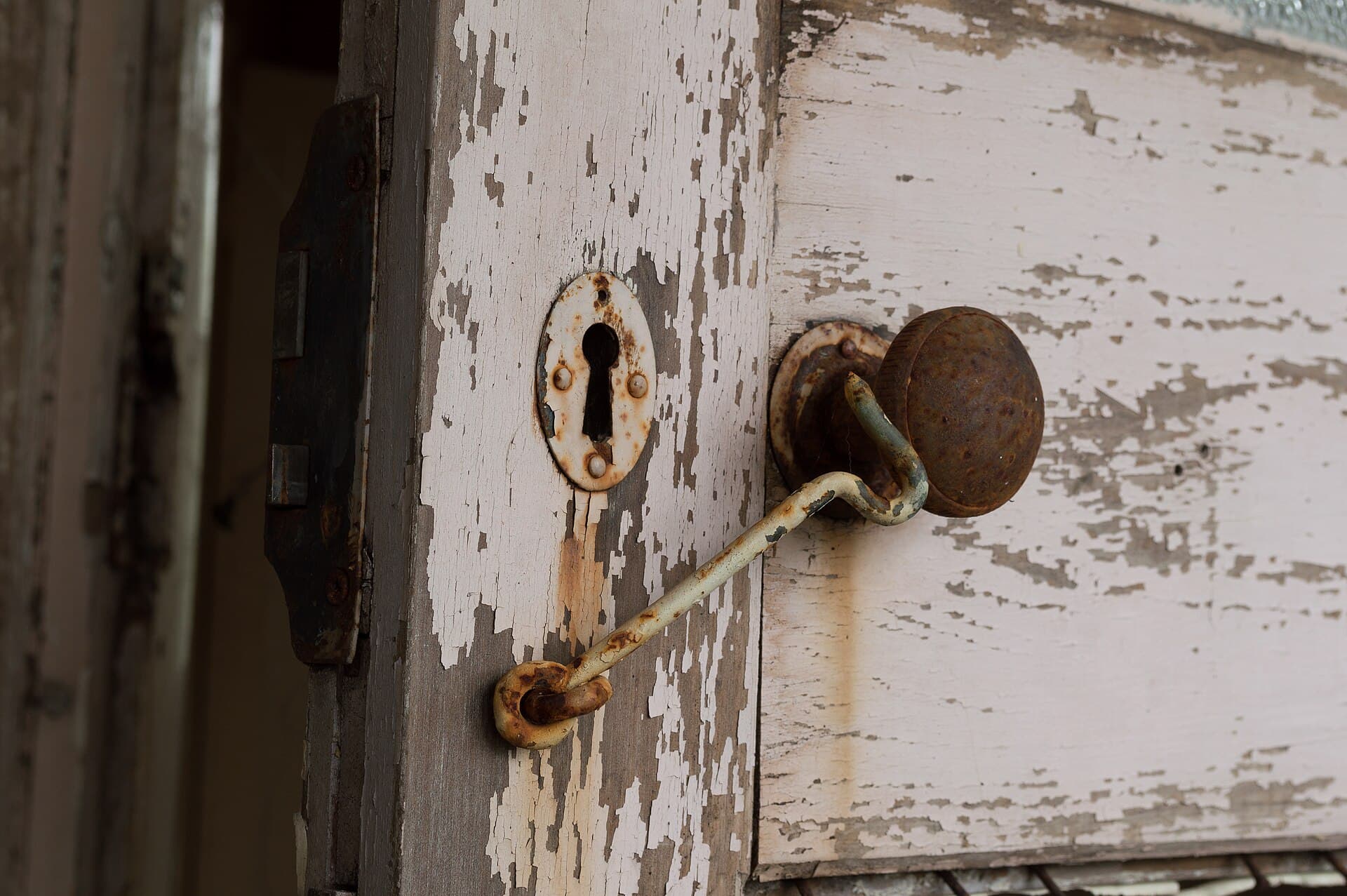
Salt and ultraviolet do not care that the lever was expensive. They care whether the coating is a real film, whether the alloy can live in chloride air, and whether anyone washes the verandah after a northerly. Coastal Australian hardware fails in public: tea-staining on a rose, white bloom on a powdercoated pull, a brass knob that has gone the colour of an old twenty-cent piece.
This is a finish note, not a lock essay. The lock that satisfies an insurer is a different argument. The finish is why that lock still turns in the eighth summer at Manly, Glenelg or Scarborough.
Aluminium doors have their own coating story in aluminium doors for coastal Australia. The furniture should not be a lesser specification than the extrusion.
The atmosphere you actually have
AS 4312 maps atmospheric corrosivity. The National Construction Code does not grade your door knob, but the same air that pits a window fastener will pit a hinge pin. Within a few hundred metres of breaking surf — and further across a flat estuary or a canal — the verandah is a marine category whether the suburb sounds leafy or not.
Western sun is the other half. A dark powdercoated pull on a west leaf in January is a frying-pan handle. Ultraviolet fades pigments. Heat cooks gaskets and dries the oil out of a cylinder. Southern elevations in Melbourne or Hobart are kinder to colour and ruder to condensation. Tropical north adds wet-season humidity, which is how a “brushed nickel” coating becomes a science project.
Inland hardware can be calmer. A Canberra winter will still frost a bare steel screw. Specify for the worst wall you have, not the postcode average.
What the common finishes actually are
Stainless, 304 and 316
Stainless is an alloy family, not a polish. 304 is the everyday austenitic grade. 316 carries molybdenum and resists pitting in chloride air. On a coastal door, 316 is the default for screws, keep screws, hinge pins, and any mesh that is trying to be a security screen.
Furniture in 316 can be satin or mirror. Satin hides the first scratches. Mirror shows fingerprints and every grain of sand. Both will tea-stain if you leave salt on them. Tea-staining is a surface rust bloom, not a hole. It looks like neglect because that is often what it is.
304 furniture inland is reasonable. 304 furniture on a beach house is how you meet a polisher.
Powdercoat
Powdercoat is a thermoset skin, usually on aluminium or a zinc casting. Done properly it is pretreated, sprayed to a measurable thickness, and baked. Done as a warehouse special it is a thin polyester over die oil, in a colour that will chalk.
Ask for the coating system, not the swatch name. Architectural powders used on window hardware often outlast the pretty coat that came on a $40 lever. Textured finishes hide more wear than a piano-black gloss. Dark colours still heat up. On a west wall that heat is not theoretical.
Cut edges and grub-screw holes fail first. A lever that was drilled after coating has bare metal at the worst place. Touch-up pens are a coastal fairy tale.
PVD and the plated cousins
Physical vapour deposition puts a thin, hard film onto a substrate in a vacuum. The better architectural houses use it for champagne, graphite and black furniture that would otherwise be a plated fantasy. Good PVD is harder than decorative chrome and more colour-stable than a cheap electroplate.
It is still thin. If the substrate is zamak — a zinc alloy common in lock furniture — a knock on a brick reveal will still crater. If the PVD was a marketing word on an unrated import, treat it as a colour, not a coating class.
Chrome plate, satin chrome and the various “nickel” looks are the old Australian default. They photograph well in a hallway. On a salt verandah they pit, bloom and then peel. Unlacquered brass is honest: it will tarnish, and you can decide whether that is a patina or a chore. Lacquered brass is a film that UV and salt will map into islands. Oil-rubbed bronze is often a painted or chemically darkened finish over a softer metal. It wears at the high spots. That can be handsome indoors. Outdoors it becomes a two-tone accident.
Dissimilar metals, the quiet vandal
A 316 pull on a mild-steel multipoint, with zinc-plated keep screws, in an aluminium stile, in salt air, is a battery. You do not need to remember the galvanic series. You need to stop mixing sacrificial and noble metals where they stay wet.
Practical rules that survive a site visit:
- Fasteners through the weather face should be 316 or an equivalent marine grade, including the tiny ones nobody quotes.
- The lock body, the furniture and the frame coating should be specified as one atmosphere, not three catalogues.
- Graphite marks and rust tears on white paint usually point to a steel screw or a dying hinge, not to the powdercoat brand.
- Stainless mesh on a mild-steel screen frame will outlive the frame, then stain it.
Wash with fresh water. Not a pressure washer driven into the cylinder and the wool pile. Salt left in a rose becomes a poultice. This is the least glamorous sentence in the hardware hub, and the one that most extends a finish.
Sun, colour and the west wall
Ultraviolet is a finish problem even a kilometre from surf. Powdercoat chalks. Plastics yellow. Black PVD can haze. Timber-look films on cheap furniture delaminate.
Choose colour for the elevation, not only the kitchen tap.
- A west-facing entry in Perth, Adelaide or western Sydney cooks dark hardware. A lighter satin or a metallic can stay touchable.
- A south porch in Melbourne or Hobart will hold moisture against the furniture. Corrosion beats fade.
- A north wall in Brisbane or Darwin gets both sun and wet-season rain. Specify for salt if you are near the water, and for wash-down everywhere.
- Heritage overlays sometimes nominate a finish — brass, painted iron, a dark bronze. Confirm before you order a graphite keypad.
Fading is not always failure. A powdercoat that has lightened but is still stuck to pretreated metal is doing a job. A plate that has gone powdery and rough is ready to collect more salt.
Maintenance that is not a personality
Monthly in a marine street, quarterly inland, is enough for most houses if someone actually does it.
- Rinse furniture, hinges and the cylinder face with fresh water.
- Dry the cylinder mouth. Do not leave a wet key in it.
- A dry lock lubricant or graphite in the keyway; not olive oil, not WD-40 as a lifestyle.
- Check grub screws and rose screws. A loose rose lets water in and wears the finish around the slot.
- Recoat or replace when the substrate shows, not when the colour is slightly tired.
Warranties on architectural hardware often name distance from surf and a wash interval. Read that sentence. A five-year coastal warranty that required a fortnightly wash is a warranty written by someone who does not live there. Prefer a maker that names a realistic cycle and a corrosivity category.
Bushfire-prone sites add radiant heat and ember attack to the same leaf. Metal furniture is usually the right instinct. Plastic covers and cheap painted roses are not. The finish still has to live through ordinary January before it ever sees a fire weather warning.
Specifying without the showroom trance
Write the atmosphere first: distance to surf, wind-driven salt, pool splash, western sun. Then write the finish as a system.
- 316, or a documented PVD or powdercoat, on every weather-side rose, pull, cylinder and hinge pin.
- Matching fasteners. No zinc leftovers from the van.
- A lock body that will not rust behind a pretty handle.
- A colour that can take the elevation’s ultraviolet.
- A wash habit you will keep.
Salt does not read the brand on the rose. It reads the alloy and the film thickness.
Hardware is part of the door, not a later mood. If the leaf is aluminium, take the coastal door essay seriously. If the leaf is timber, the finish on the furniture still has to outlast the paint cycle. Specify both, then rinse the verandah after the northerly, like someone who intends to keep the house.
Frequently asked questions
- Is 316 stainless always the right coastal finish?
- On fasteners, hinge pins and mesh, usually yes. On lock furniture, a well-specified PVD or a marine-rated powdercoat can look calmer than a bright mill stainless and still last. Bare 304 near surf is the common disappointment.
- Will powdercoat fade on a west-facing door?
- It will chalk and lighten, faster in a dark colour. A quality architectural powder with a documented pretreatment lasts years longer than a thin warehouse coat. Wash it. Do not take a high-pressure lance to the seals.
- Does PVD chip like chrome plating?
- Less readily, if the substrate and the coating thickness are honest. PVD is a thin vapour-deposited film, not a pot of paint. A cheap PVD on zamak still fails at the edges. Specify the maker’s coastal rating, not the colour name.
- Can I mix brass indoor furniture with stainless outside?
- Yes. Keep the metals from making a wet couple on the same leaf. A brass inner rose and a 316 outer cylinder is ordinary. A mild-steel multipoint behind a stainless pull is how brown tears appear on white paint.
Keep reading
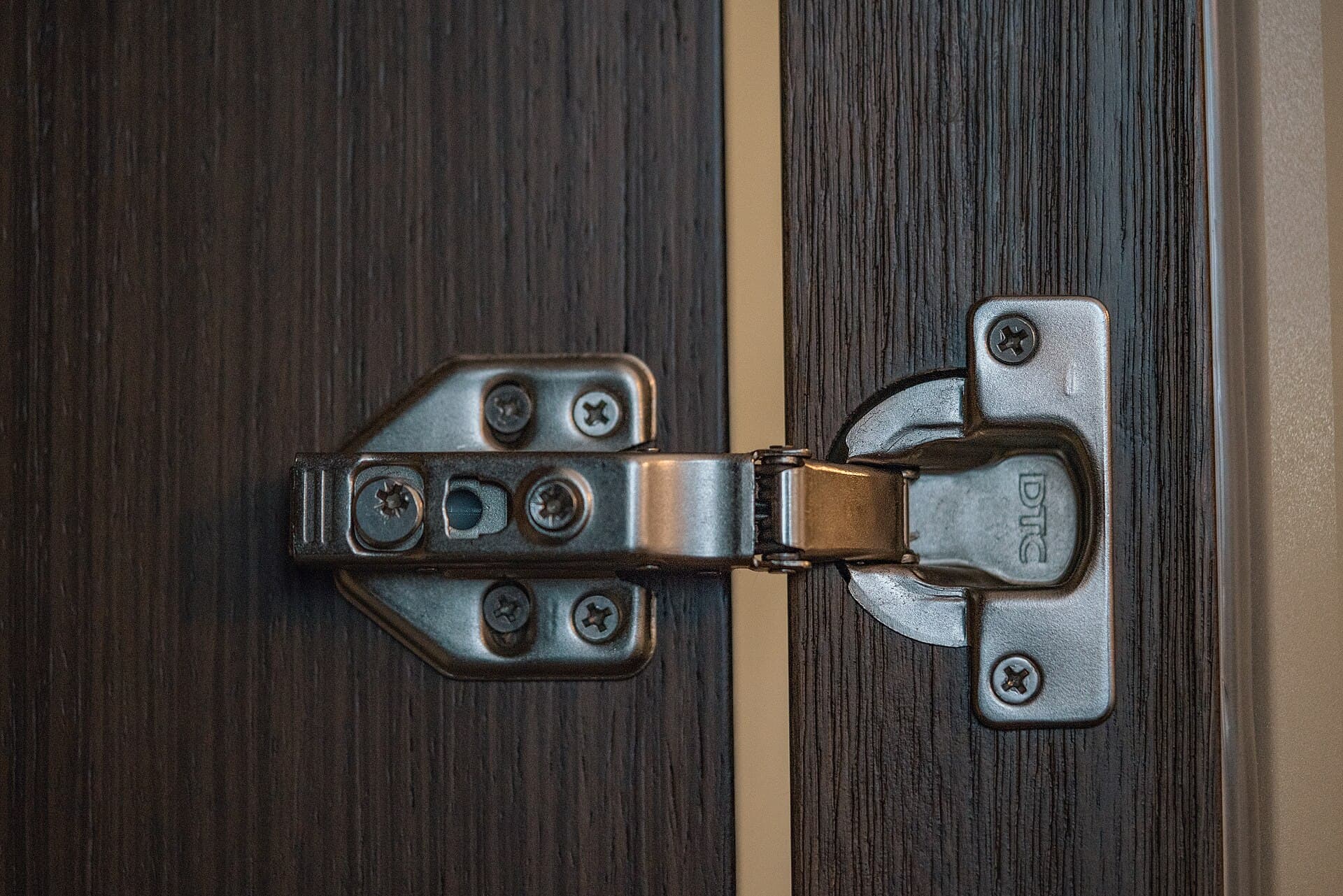
Hinges, soft close and modern ironmongery
Butt, concealed and pivot hinges, the three-hinge rule, fire-door ironmongery and soft-close closers — how Australian doors actually hang, swing and shut.
Door Sales editorial · 27 February 2025
Door locks that meet Australian insurance
Deadlocks, AS 4145, keying alike and the clauses insurers actually read — what a locksmith specifies so a claim is not lost on a nightlatch.
Tom Ashford · 14 November 2024
When to repair or replace a front door
Rot, delamination, failed seals and heritage value — the cost crossover where an Australian front door stops being a repair and starts being a doorset.
Door Sales editorial · 6 November 2025